
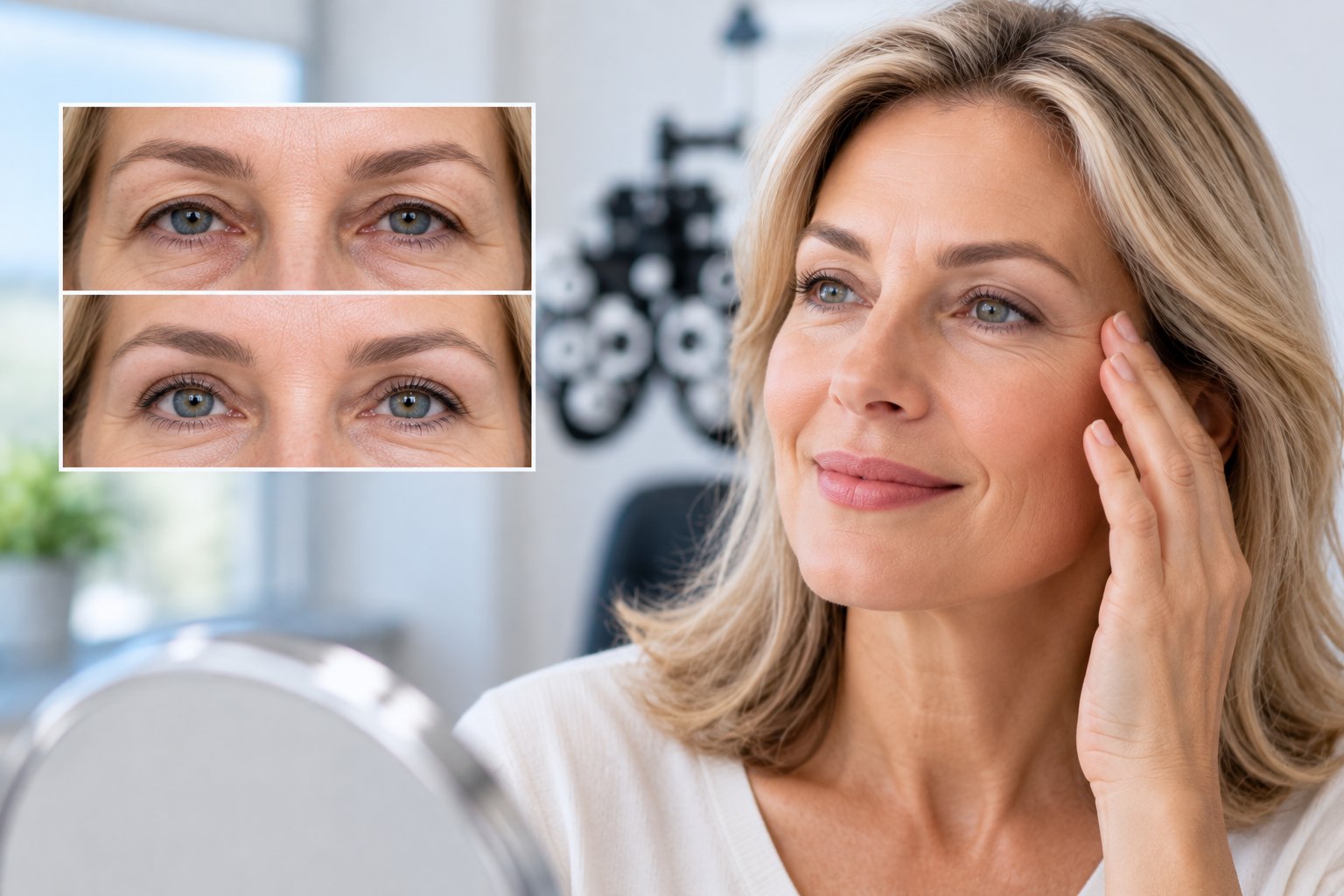
Eyelid surgery can be purely cosmetic or medically necessary, depending on whether drooping skin or lid tissue actually blocks your vision. Insurance carriers generally require documented proof, not personal preference, before an eyelid surgery medically necessary claim is approved. At Atlanta Vision Laser And Cataract Center, our eyelid surgery evaluations help determine which category your case falls into.
Cosmetic upper and lower eyelid surgery reshapes the area around your eyes to look more rested and refreshed, smoothing sagging skin and reducing puffiness that can make you appear tired or older than you feel. Medically necessary eyelid surgery is a different matter: it treats a functional problem, most often excess upper eyelid skin or a drooping lid that physically blocks part of your visual field. The distinction matters because it determines both how the surgery is evaluated and, in many cases, who pays for it.
Two conditions drive most medical-necessity determinations. Dermatochalasis is the medical term for excess, loose skin on the upper eyelid that has lost its elasticity, often hanging low enough to rest on the eyelashes or fold over the lash line. Ptosis refers to drooping of the eyelid tissue itself, where weakened muscles or tendons let the lid sit lower than normal, reducing how much of the world you can see without tilting your head back or raising your eyebrows to compensate. Either condition, on its own or together, can crowd out enough of the upper visual field that everyday tasks become genuinely harder.
Patients with dermatochalasis or ptosis commonly describe a specific set of symptoms. Reading can become tiring because the eyes have to work harder to see past the overhanging skin. Driving, especially at night, can feel less safe when peripheral vision above the eyes is compromised. Many people also notice eye fatigue by the end of the day, or headaches and brow strain from unconsciously raising their eyebrows all day to lift the eyelids out of the way. None of these symptoms alone proves medical necessity, but together they form the pattern that eye doctors and insurance reviewers look for.
At Atlanta Vision Laser And Cataract Center, our surgeons have experience treating eyelid ptosis and evaluating dermatochalasis, and they can walk you through which category your case is likely to fall into before any surgical decision is made. Upper blepharoplasty is the procedure typically at issue in these evaluations, since it addresses the sagging skin, fat deposits, and weakened muscles along the upper lid that can obstruct vision. Lower blepharoplasty, which corrects lower eyelid drooping and the hollow or dark-circle appearance beneath the eyes, is generally considered a cosmetic procedure because the lower lid does not typically block the visual field the way the upper lid can.
How Insurance Carriers Evaluate Medical Necessity
Insurance companies do not take a patient’s word that eyelid surgery is medically necessary; they require objective, documented evidence. As a general industry standard, that evaluation typically includes a few consistent steps. A visual field test measures how much of your peripheral vision is currently available with the eyelids in their natural position. The same test is then repeated with the excess eyelid skin temporarily taped up out of the way, simulating what your vision would look like after surgery. If the taped test shows a measurable improvement in the visual field, that comparison becomes central evidence supporting a medical-necessity claim.
Photographic documentation usually accompanies the visual field testing. Photographs taken from multiple angles help show how far the excess skin actually hangs, whether it rests on or covers the eyelashes, and how the eyelid position compares to normal anatomy. Combined with a description of functional symptoms such as difficulty reading, difficulty driving, eye fatigue, or brow strain from compensating, this documentation gives an insurance reviewer a fuller picture than a single office visit could provide.
It is worth being direct about what this process does and does not guarantee. Meeting these general criteria does not automatically mean any specific insurance plan will approve coverage; every carrier and policy has its own rules, exclusions, and review process. What the documentation does is give your case the best possible chance of being evaluated fairly on medical grounds rather than being assumed to be cosmetic by default. To understand what your own plan may require, our insurance coverage information page is a useful starting point before your consultation.
Upper Blepharoplasty vs. Lower Blepharoplasty
The two procedures are often discussed together, but they serve different purposes and are evaluated differently by insurance carriers.
- Upper blepharoplasty removes excess skin, fat, and sometimes tightens muscle along the upper eyelid. It is the procedure most often considered medically necessary because upper eyelid tissue is positioned to physically obstruct the visual field when it becomes excessive or droops.
- Lower blepharoplasty addresses drooping skin, puffiness, and dark circles beneath the eyes. It is generally categorized as cosmetic since the lower lid does not typically hang into the line of sight.
- A combined procedure, addressing both upper and lower lids in the same surgical session, is common. When a case combines cosmetic and functional goals, insurance generally covers only the portion of the procedure tied to documented functional impairment, while the cosmetic portion is billed separately.
Patients considering surgery for purely aesthetic reasons, such as reducing under-eye puffiness or achieving a more refreshed appearance with no vision impact, should expect to pay out of pocket, and that is a completely reasonable and common choice.
What Eyelid Surgery Typically Costs
Cost is often the first question once the cosmetic-versus-medical distinction becomes clear, since it directly affects the out-of-pocket outlook. Blepharoplasty in the United States typically ranges from about $2,000 to $7,000, with an average cost around $4,000, depending on whether one or both lids are treated, whether upper and lower procedures are combined, and regional differences in surgical fees. Because blepharoplasty is generally performed as an outpatient procedure, it helps limit some of the costs associated with a hospital surgical suite, which is one reason the price range stays comparatively contained.
When the upper eyelid procedure is approved as medically necessary, insurance coverage can substantially reduce what a patient pays directly, sometimes covering the majority of the surgical cost. When the procedure is purely cosmetic, or when only the cosmetic portion of a combined case is being billed, that portion is typically the patient’s responsibility. Atlanta Vision Laser And Cataract Center accepts most major insurance providers, and our team can help you understand, before scheduling, which portion of your specific case is likely to be classified as functional versus cosmetic.
How to Know Which Category Applies to You
If you are unsure whether your own drooping eyelids fall into the cosmetic or medically necessary category, a few honest questions can help clarify things before your appointment. Does the skin visibly rest on your eyelashes or fold over the lash line when you look in a mirror? Do you find yourself lifting your eyebrows throughout the day just to see clearly, to the point where your forehead feels tense or sore by evening? Have you noticed that reading fine print, driving at night, or seeing things above and to the side has become harder over time, separate from any general changes in your eyesight? Answering yes to several of these suggests a functional component worth having formally evaluated rather than assumed away.
The only reliable way to know for certain is a clinical evaluation, which is exactly where visual field testing and photographic documentation come in. Our doctors, including Leonard Achiron, OD, David O’Day, MD, and Steven W. Stetson, MD, bring decades of combined experience in both refractive and eyelid procedures to that evaluation, so you get a clear, honest assessment rather than a sales pitch in either direction. You can review each doctor’s background on our meet the doctors page before your visit, or reach out through our contact page to schedule a consultation.
Whether your goal is restoring vision that has quietly narrowed over the years or simply looking as rested as you feel, the first step is the same: a thorough evaluation that separates what is cosmetic from what is medically documented. That evaluation protects you from paying out of pocket for something insurance might have covered, and it protects you from expecting insurance to cover something that was never going to qualify. Either way, you leave the appointment with a clear answer instead of a guess.
Frequently Asked Questions
Does insurance cover eyelid surgery?
Insurance can cover upper eyelid surgery when documentation shows the eyelid skin or tissue is obstructing your vision, typically demonstrated through a visual field test performed before and after the eyelid skin is taped up, along with supporting photographs. Coverage is evaluated case by case, and no insurer guarantees approval in advance. Lower eyelid surgery is rarely covered because it does not typically block vision. Atlanta Vision Laser And Cataract Center accepts most major insurance providers and can help you understand your specific plan’s requirements before scheduling.
What is the difference between dermatochalasis and ptosis?
Dermatochalasis refers to excess, loose skin on the upper eyelid that has lost elasticity over time, sometimes hanging low enough to rest on the eyelashes. Ptosis refers to an actual drooping of the eyelid tissue itself, caused by weakened muscles or tendons, which lowers the eyelid’s resting position. The two conditions can occur separately or together, and both can reduce the upper visual field enough to be considered medically significant rather than purely cosmetic.
How much does eyelid surgery cost?
Blepharoplasty in the United States typically ranges from about $2,000 to $7,000, averaging around $4,000, depending on whether one or both eyelids are treated and whether the case is medical, cosmetic, or combined. Because it is generally performed as an outpatient procedure, some of the costs associated with a surgical suite are limited. When a case qualifies as medically necessary, insurance may cover a significant portion of the cost; purely cosmetic work is typically the patient’s responsibility.
What is the difference between upper and lower blepharoplasty?
Upper blepharoplasty treats sagging skin, fat deposits, and weakened muscles along the upper eyelid, and is the procedure most often evaluated for medical necessity because it can obstruct the visual field. Lower blepharoplasty corrects lower eyelid drooping and dark circles beneath the eyes, and is generally considered a cosmetic procedure since it does not typically interfere with vision. Many patients choose to have both performed together, with insurance, if applicable, applying only to the upper eyelid portion.
How do I know if my eyelid surgery would be considered medically necessary?
Signs worth having evaluated include eyelid skin that visibly rests on your eyelashes, frequently raising your eyebrows throughout the day to see clearly, brow strain or headaches from that compensation, and noticeable difficulty reading or driving, particularly at night, that is not explained by your general eyesight. A clinical evaluation, including visual field testing before and after taping the eyelid skin, is the only reliable way to confirm medical necessity. Our doctors can perform that evaluation and explain, honestly, which category your case is likely to fall into.