

Eye Doctor for Presbyopia in Hapeville, GA
Presbyopia is an age-related loss of near vision that affects most adults after age 40, making it harder to read, use a phone, or work on a computer without reading glasses. At Atlanta Vision Cataract and Laser Center in Hapeville, GA, we offer trusted, experienced-led treatment options, including Qlosi eye drops, monovision LASIK, and refractive lens exchange, to reduce dependence on reading glasses.
Understanding Presbyopia
Presbyopia, also known as age-related farsightedness, affects most people after the age of 40. It is a normal result of the aging process: the eye’s crystalline lens is made of proteins that gradually lose flexibility, so the lens can no longer change shape and bend light rays sharply enough to focus on close objects like books, computer screens, or a sewing needle. Symptoms typically begin between ages 40 and 50 and progressively worsen through age 65, and many patients also notice eye strain or headaches after close work.
While many people simply start wearing reading glasses or update their prescription lenses, others prefer treatments that reduce or eliminate the need for eyewear. At Atlanta Vision Cataract and Laser Center, we offer several options so your treatment plan fits your vision needs, lifestyle, and eye health.
Presbyopia Treatment Options
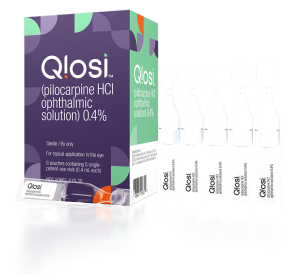
Qlosi is an FDA-approved prescription eye drop designed to improve near vision without reading glasses. It contains pilocarpine hydrochloride 0.4%, a well-studied medication that gently constricts the pupil to increase depth of focus. Most patients experience enhanced near vision within about 20 minutes of applying the drops, with effects lasting up to eight hours, making it a convenient option for reading, using a phone, or working on a computer. Side effects are typically mild and temporary, such as eye redness or headache.
For patients seeking a longer-term solution, monovision LASIK is another option. Because standard LASIK does not correct the eye’s natural focusing ability, it does not address presbyopia on its own. However, during monovision LASIK, Dr. David O’Day corrects one eye for distance vision and leaves the other slightly nearsighted for close-up tasks. After a short adjustment period, most monovision patients find this feels natural and are significantly less dependent on reading glasses.
Patients who also have cataracts, or who want a longer-lasting surgical solution, may be candidates for refractive lens exchange, in which the eye’s natural lens is replaced with a multifocal or extended-range intraocular lens to improve both near and distance vision at the same time. This procedure uses the same trusted lens options, including TECNIS® and AcrySof® lenses, that we use for cataract surgery.
Choosing the Right Treatment for You
The right presbyopia treatment depends on your age, lifestyle, visual demands, and overall eye health. Our experienced doctors start with a comprehensive eye exam before recommending Qlosi, monovision LASIK, refractive lens exchange, or eyewear. Presbyopia often overlaps with other vision needs, so we also offer PRK, diabetic retinopathy treatment for patients managing diabetes, and pediatric eye care for grandchildren tagging along.
If reading glasses are getting in the way of daily life, our trusted, top-rated Hapeville and Atlanta eye care team, serving East Point, College Park, and Forest Park, can help. Schedule an appointment online or call (404) 765-2020.
Presbyopia FAQs
What is presbyopia?
Presbyopia is an age-related vision condition that typically begins after age 40. It occurs when the eye’s natural lens becomes less flexible, making it harder to focus on close-up objects such as books, phones, or computer screens.
What are common symptoms of presbyopia?
Common symptoms include difficulty reading small print, needing to hold reading material farther away, eye strain, headaches after close work, and blurry near vision. Symptoms usually worsen gradually with age.
Do I need reading glasses if I have presbyopia?
Many people manage presbyopia with reading glasses, bifocals, or progressive lenses. However, some patients choose treatment options to reduce their dependence on glasses for near tasks.
What is Qlosi, and how does it treat presbyopia?
Qlosi is an FDA-approved prescription eye drop that improves near vision by gently constricting the pupil, increasing depth of focus. Most patients notice improved near vision within about 20 minutes, with effects lasting up to 8 hours, making it a convenient, non-invasive option.
Can LASIK treat presbyopia?
Standard LASIK does not correct presbyopia because it does not address the eye’s natural focusing ability. However, monovision LASIK may be an option for some patients by correcting one eye for distance vision and the other for near vision, reducing reliance on reading glasses.
How do I know which presbyopia treatment is right for me?
The best treatment depends on your age, lifestyle, visual needs, and overall eye health. A comprehensive eye exam at Atlanta Vision Cataract & Laser Center allows our doctors to recommend the most appropriate option, whether that’s Qlosi, eyewear, or surgical treatment.