
Most healthy adults with a stable prescription and a healthy cornea are good candidates for LASIK, but true eligibility depends on several specific factors your eye doctor checks during a comprehensive evaluation. If you’re asking whether you’re a candidate for LASIK, the criteria below on age, prescription range, corneal thickness, and medical history will give you a realistic idea before you schedule a consultation for LASIK surgery.
What Makes Someone a Good Candidate for LASIK?
LASIK is one of the most researched elective procedures in modern medicine, and the doctors at Atlanta Vision Laser and Cataract Center have collectively performed or co-managed well over 100,000 LASIK and refractive procedures between them. Dr. Leonard Achiron has co-managed more than 50,000 LASIK procedures, Dr. David O’Day has personally performed more than 80,000 LASIK procedures, and Dr. Steven Stetson has performed more than 80,000 refractive surgeries. That volume of experience matters, because determining who is and isn’t a good candidate for LASIK is not a single yes-or-no question. It’s a combination of age, prescription stability, prescription strength, corneal health, and overall medical history, all reviewed together during an in-person exam.
Below is a breakdown of the main factors your eye doctor will evaluate.
Age Requirements
The generally accepted minimum age for LASIK is 18 years old. Vision continues to change through the teenage years and into the early twenties in many people, so operating on eyes that haven’t stabilized yet raises the risk of needing additional treatment later.
There isn’t a strict maximum age cutoff for LASIK. However, as people move into their 40s, 50s, and beyond, age-related eye changes such as presbyopia (the natural loss of close-up focusing ability) or the early development of cataracts can affect whether LASIK is still the best option. In some cases, an older patient may be a better fit for a different procedure, such as refractive lens exchange rather than LASIK. This is something a comprehensive eye exam can sort out.
Prescription Stability
Your prescription generally needs to have been stable, meaning essentially unchanged, for at least the last 12 months. If your glasses or contact lens prescription has been shifting from year to year, your eye doctor will typically want to see it hold steady before considering you a strong candidate. A stable prescription gives the surgical team confidence that the correction planned today will still match your vision needs well into the future.
Prescription Range
LASIK is approved by the FDA to treat a defined range of refractive errors:
- Nearsightedness (myopia) up to approximately -12 diopters
- Farsightedness (hyperopia) up to approximately +6 diopters
- Astigmatism up to approximately 6 diopters
If your prescription falls within these ranges and the rest of your eye health checks out, LASIK is often a viable option. Prescriptions outside these ranges don’t necessarily mean you’re out of options entirely, but they do mean LASIK specifically may not be the right tool, and your doctor may discuss alternatives instead.
Corneal Thickness and Health
LASIK works by reshaping the cornea, so having adequate corneal thickness is essential. During your evaluation, your doctor will measure your corneal thickness precisely. If your corneas are too thin, LASIK may not be safe, since removing tissue to reshape a cornea that’s already borderline thin can compromise its structural integrity.
Your corneas also need to be free of disease and irregularities. Conditions like keratoconus (a progressive thinning and bulging of the cornea), irregular corneal shape, or scarring from a past infection or injury can all rule out LASIK. The good news is that patients who aren’t candidates due to corneal thickness or shape issues aren’t necessarily without options. PRK, a related laser vision correction procedure, works differently on the cornea’s surface and can sometimes be appropriate where LASIK isn’t. If you’re curious whether that route might fit your situation, this related guide on PRK candidacy walks through the signs it might be worth exploring.
Medical and Health Conditions to Discuss
A number of health factors can disqualify or at least delay LASIK candidacy until they’re resolved or better controlled. These include:
- Pregnancy or nursing (hormonal changes can temporarily affect vision and healing)
- Uncontrolled diabetes
- Uncontrolled autoimmune disorders, such as rheumatoid arthritis or Sjögren’s syndrome
- Significant dry eye disease
- Cataracts
- Macular degeneration
- Diabetic retinopathy
- Glaucoma or other uncontrolled eye disease
- Prior eye trauma or injury
- Complications from a previous eye surgery
- Uncorrected amblyopia (lazy eye) or strabismus
None of these automatically mean “no” forever. Some, like uncontrolled diabetes or an autoimmune flare, may simply mean LASIK is off the table until the underlying condition is stabilized. Others, like significant dry eye, may need to be treated first since LASIK can temporarily worsen dryness during healing. This is exactly why an honest, detailed conversation with your eye doctor about your full medical history matters more than any online checklist.
Why a Real Exam Still Matters
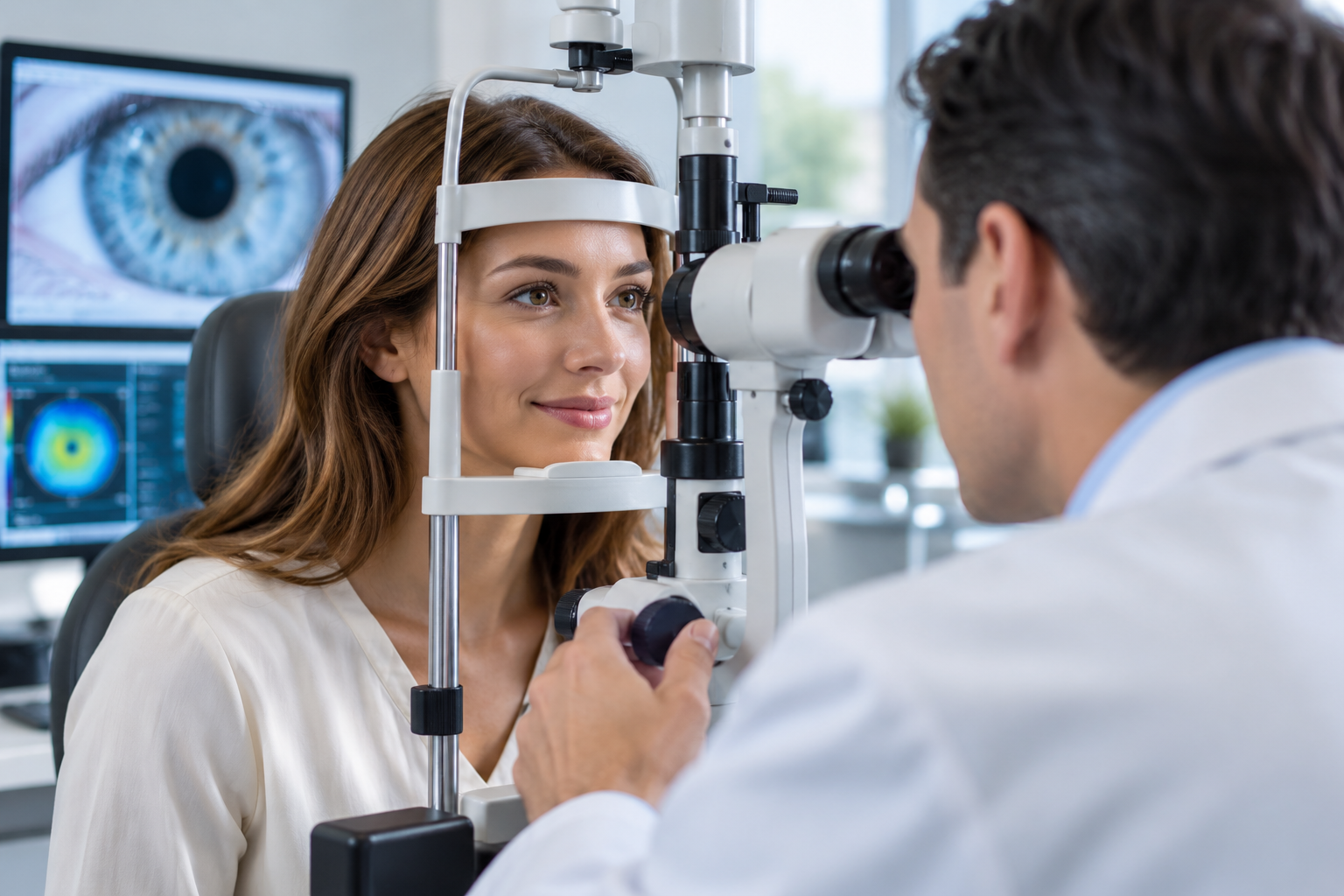
Everything above gives you a realistic sense of where you likely stand, but no article, checklist, or online quiz can replace an actual comprehensive eye exam. Corneal thickness, precise prescription measurements, tear film quality, and retinal health all require in-person diagnostic testing that simply can’t be assessed from a list of symptoms. Think of this guide as a way to walk into your consultation informed and ready to ask the right questions, not as a diagnosis.
If you want a quick starting point before booking a full evaluation, the practice’s own LASIK self-assessment tool is a fast way to flag any obvious concerns. From there, the next real step is a comprehensive exam with one of the doctors, where corneal mapping, prescription measurement, and a review of your health history will give you a definitive answer.
What Happens If You’re Not a Candidate?
If a comprehensive exam shows LASIK isn’t the right fit, that’s not the end of the road. Depending on the specific reason, common alternatives include:
- PRK, for patients with thinner corneas who still want laser vision correction
- Refractive lens exchange, sometimes considered for older patients or those with higher prescriptions outside LASIK’s treatment range
Your eye doctor can walk you through which alternative, if any, makes sense once your exam results are in.
Ready to Find Out?
The most reliable way to know for certain whether you’re a candidate for LASIK is to schedule a comprehensive evaluation with an experienced team. You can learn more about the doctors performing these evaluations on the Meet the Doctors page, review what to expect as a new patient, or simply reach out through the contact page to schedule your exam.
Frequently Asked Questions
Is there an age limit for LASIK?
The minimum age for LASIK is generally 18, since vision needs to be fully stable before surgery. There’s no strict maximum age, but as patients get older, conditions like presbyopia or early cataracts can shift the conversation toward other options, which is something your doctor will evaluate during your exam.
Can I get LASIK if I have dry eyes?
Significant dry eye disease can affect LASIK candidacy because the procedure can temporarily increase dryness during healing. In many cases, dry eye can be treated and better managed first, after which candidacy can be reassessed. A comprehensive exam is the only way to know where you personally stand.
What if my corneas are too thin for LASIK?
If your corneas don’t have enough thickness for LASIK to be performed safely, you’re not necessarily out of options. PRK is a related laser procedure that works on the surface of the cornea rather than requiring a corneal flap, and it’s often considered for patients who don’t qualify for LASIK due to thickness alone.
Can I have LASIK if I’m pregnant or nursing?
Pregnancy and nursing are generally reasons to delay LASIK rather than permanent disqualifiers. Hormonal changes during these periods can affect vision and healing, so most doctors recommend waiting until afterward and until your prescription has stabilized again before pursuing surgery.
What happens during the evaluation to determine if I’m a candidate?
A comprehensive LASIK evaluation typically includes measuring your prescription, checking corneal thickness and shape, evaluating your tear film for dryness, and reviewing your overall eye and medical history. This full picture is what allows your doctor to confirm candidacy with confidence, rather than relying on prescription numbers alone.
act page to schedule your exam.