
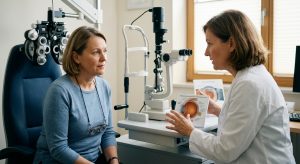
In many cases LASIK can be enhanced if your vision changes or a small prescription remains, but you need a stable prescription, enough corneal thickness, and healthy eyes. Most enhancements happen months after the first procedure. Atlanta Vision Cataract and Laser Center offers LASIK consultations in Hapeville.
Can LASIK Be Done Twice?
Often, yes. A follow-up procedure to fine-tune your vision after LASIK is called an enhancement, or a touch-up. It is not needed by most patients, but it is an option for those who still have a small prescription after healing or whose vision drifts over time. Whether it is a good idea for you depends on your eyes, and your surgeon must confirm that you meet the safety requirements before offering one.
How Many Patients Need a LASIK Enhancement?
Only a small percentage of patients need one. Published estimates commonly range from under 1 percent to about 5 percent, and the rate is higher among people who start with a stronger prescription or significant astigmatism. Every eye heals a little differently, which is why surgeons plan for the possibility of an enhancement even though most patients never need it.
Why Might Vision Change After LASIK?
There are several reasons someone may notice blurry vision after LASIK, and not all of them mean the surgery failed. Some are part of normal healing, while others are signs that a touch-up might help.
- Residual prescription, where a small amount of nearsightedness, farsightedness, or astigmatism remains after healing
- Regression, where the prescription gradually drifts back toward its original direction over months or years
- Natural eye changes, such as the onset of presbyopia in your 40s, which LASIK does not prevent
- Dry eye or surface irregularities that make vision seem worse even when the prescription is stable
Because several of these causes look alike, your surgeon will need to examine you before deciding whether an enhancement can help.
What Is LASIK Regression?
Regression is a gradual return of some of the original prescription after surgery. It is more likely in younger patients, in people with higher prescriptions, and in those whose eyes were still changing at the time of treatment. It is usually slow and mild, and many people never notice it. When it does become bothersome, it can often be addressed with glasses, contacts, or an enhancement.
How Long Should You Wait Before an Enhancement?
Timing matters. Your prescription needs to be stable, meaning it has stopped changing across multiple visits. Enhancements are generally considered at least three months after the original LASIK, and some surgeons recommend waiting longer, especially for patients with higher prescriptions. Rushing in too soon can mean treating an eye that is still healing, and the result may not hold.
- Your prescription should be stable over repeated measurements
- The cornea should be fully healed and the surface healthy
- Dry eye and other issues should be under control
- Your surgeon should confirm that your cornea has enough tissue left to treat safely
What Does a LASIK Touch-Up Involve?
The exact approach depends on your eyes and how long it has been since your first procedure. There are two common methods, and your surgeon will recommend the one that fits you best.
- Flap lift: the original flap is gently lifted, the laser makes the adjustment, and the flap is repositioned
- Surface treatment: a PRK-style treatment is done on the surface of the cornea, sometimes over the existing flap
In both cases, numbing drops are used, and the laser portion is typically brief. A touch-up is generally quicker than the first surgery, although the healing steps and aftercare are similar. You can learn how the original procedure works on our LASIK page.
What Are the Risks of a Second Procedure?
Like any surgery, an enhancement carries risks, and surgeons weigh them carefully. If the corneal flap is lifted many months or years after the first procedure, there is a higher chance of problems such as cells growing under the flap, which may require additional treatment. Removing more tissue also makes the cornea thinner, which is why enough remaining thickness is essential.
- Dry eye, which can temporarily increase after another procedure
- Glare, halos, or fluctuating vision during healing
- Epithelial ingrowth under the flap, which is uncommon but more likely with late flap lifts
- Under- or over-correction that may still leave a small prescription
Your doctor will go over these risks with you, and if an enhancement is not a good idea, there are other ways to improve your vision.
What If You Are Not a Candidate for an Enhancement?
If your cornea is too thin or your eyes are not healthy enough, your surgeon may recommend other options. For small prescriptions, thin glasses or contact lenses can be a simple solution. For some adults, particularly those developing cataracts or struggling with near vision, options such as cataract surgery or refractive lens exchange may be worth discussing.
How Much Does a LASIK Enhancement Cost?
Enhancement costs vary, and policies differ from one practice to another. Some practices include enhancements for a period after the initial surgery, while others charge separately, often at a lower price than the original procedure. Ask about this before you choose a surgeon so you know what to expect. Our payment options page outlines financing, including 0% financing through CareCredit.
How Can You Lower Your Chance of Needing a Touch-Up?
You cannot control every factor, but you can help. Wait until your prescription has been stable before choosing surgery, follow every aftercare instruction, attend all follow-up visits, and report any changes in your vision early. Choosing a practice with extensive experience and modern technology also helps. Our experienced eye doctors, optometrist Dr. Leonard Achiron, OD, and ophthalmologist Dr. David O’Day, MD, have performed more than 80,000 LASIK procedures combined.
To understand the technology behind precise treatments, read our guide to the VISX Star S4 IR and wavefront-guided LASIK.
How Does Age Affect Vision After LASIK?
LASIK corrects the shape of your cornea, but your eyes keep changing as you age. Around the age of 40, most people begin to lose the ability to focus on near objects, a normal change called presbyopia. LASIK does not stop that from happening, so a patient who had excellent distance vision after LASIK in their 30s may need reading glasses later. This is not regression and it is not a sign that the procedure failed.
Later in life, cataracts can also affect vision, and cataract surgery can be performed after LASIK. Your surgeon will want to know about your earlier treatment so lens measurements can be planned correctly.
What Should You Ask Before Agreeing to a Touch-Up?
A touch-up should be a careful decision, not an automatic one. A good surgeon will explain why your vision has changed, whether an enhancement can help, and what other choices you have.
- Is my prescription stable, and how do you know?
- How much corneal thickness remains, and is it enough for another treatment?
- Would you lift the flap or treat the surface, and why?
- What are the specific risks in my case?
- Is the enhancement included in my original fee, and for how long?
How Long Does Recovery Take After an Enhancement?
Most patients notice improved vision within the first day, and many feel close to fully recovered within a month, although complete healing can take several months. Surface treatments may take a little longer to feel comfortable than flap lifts. As with your first procedure, you will use prescribed drops, avoid rubbing your eyes, and return for follow-up checks so your doctor can confirm that your vision is stable.
Even after a successful touch-up, small differences in vision can remain. A realistic goal is clear, comfortable vision for everyday life, which is something your surgeon can discuss with you before any procedure.
- Plan a quiet first day after the enhancement and have someone drive you home
- Use all drops exactly as prescribed
- Protect your eyes from dust, smoke, and water during early healing
Why Work With an Experienced LASIK Vision Specialist?
Whether you are considering your first LASIK procedure or a touch-up, it helps to see a vision specialist who knows your eyes. Atlanta Vision Cataract and Laser Center is a trusted Hapeville vision center with more than 20 years of service to the Atlanta community, and LASIK is the procedure our practice is known for. Our optometrist and ophthalmologist work together, and the practice also offers PRK, presbyopia treatment, and refractive lens exchange when another option may fit your eyes better.
A Note on General Information
This article is general information and not medical advice. Whether an enhancement is appropriate depends on your eyes, your healing, and a full examination. Talk with your eye surgeon about your own situation.
Ask About a LASIK Enhancement in Hapeville
If your vision has changed since LASIK, or you are thinking about LASIK for the first time, contact Atlanta Vision Cataract and Laser Center at (404) 765-2020. Our office is at 3619 South Fulton Avenue #101, Hapeville, GA 30354, serving patients from Atlanta, East Point, College Park, and Forest Park.