
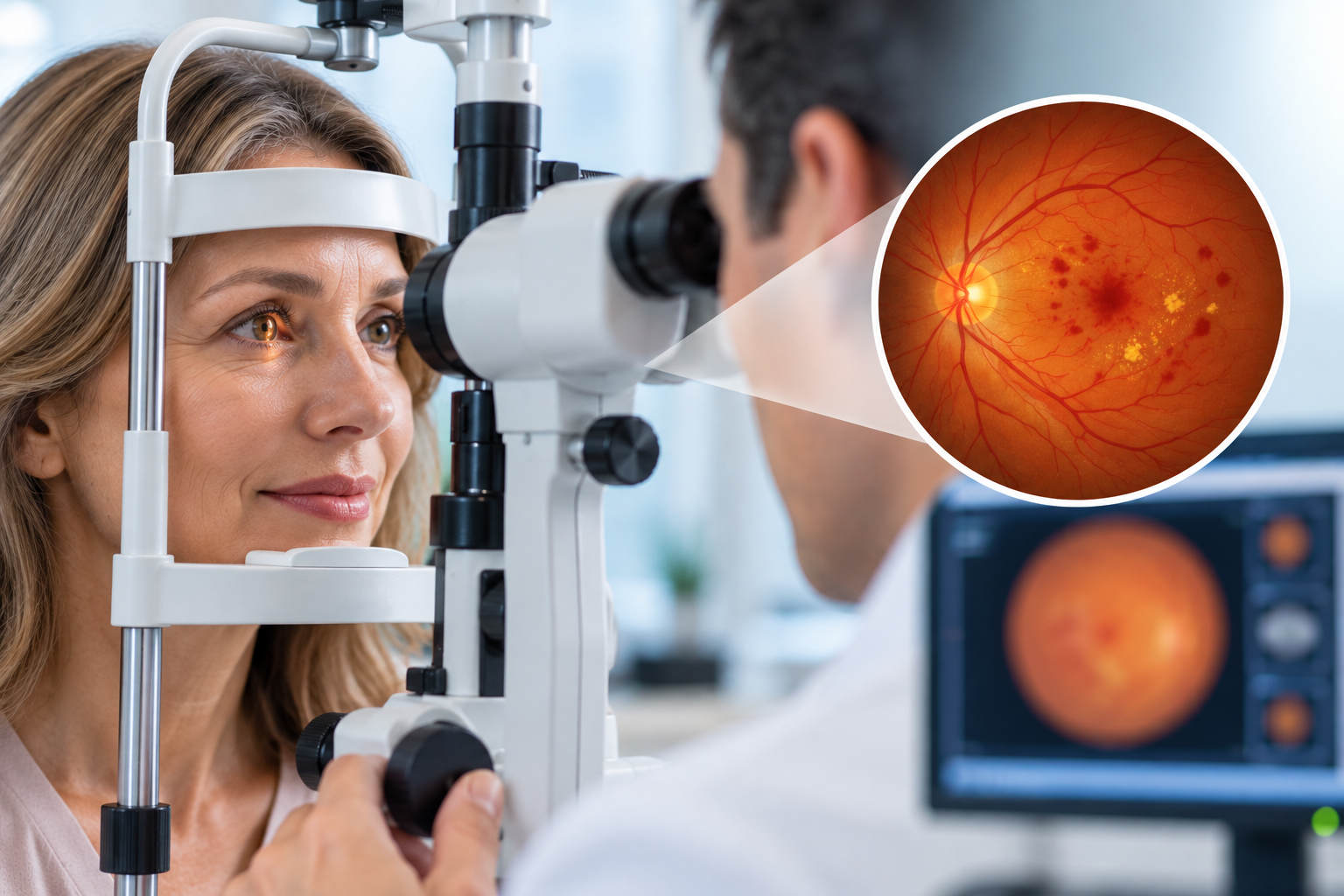
Diabetic retinopathy often develops with no noticeable symptoms, which is exactly why understanding the diabetic retinopathy warning signs matters, even when your vision feels normal. Blurred or wavy vision, new floaters, and trouble with night vision can signal changes in the retina’s blood vessels. Because damage can progress before symptoms appear, scheduling routine diabetic retinopathy screening is the most reliable way to protect your long-term vision.
Why “No Symptoms” Doesn’t Mean “No Risk”
If you live with diabetes, it can be tempting to assume that your eyes are fine as long as your vision seems clear. Unfortunately, diabetic retinopathy is a condition that frequently causes no noticeable symptoms in its earliest stages. High blood sugar can quietly damage the small blood vessels in the retina, the light-sensitive tissue at the back of the eye, long before you notice any change in how you see.
This is precisely why routine screening matters even when you feel completely fine. By the time symptoms become obvious, the disease may have already progressed to a stage where treatment is more complex. Regular eye exams allow an eye care provider to detect changes in the retina before they affect your day-to-day vision, giving you and your doctor more options and more time to act.
Diabetic Retinopathy Warning Signs to Watch For
As diabetic retinopathy advances, it can begin to produce noticeable changes in vision. Being familiar with these warning signs can help you know when it’s time to schedule an exam rather than waiting for your next annual checkup. Common signs include:
- Blurred or wavy vision
- Poor night vision or difficulty adjusting between light levels
- Eye floaters, such as spots or dark “strings” drifting across your field of vision, sometimes with occasional flashes of light
- Difficulty distinguishing between colors
- Reduced peripheral, or side, vision
- Vision that fluctuates from day to day, whether for near tasks or distance viewing
None of these symptoms guarantee that diabetic retinopathy is present, and some can point to other eye conditions. However, if you notice any of them, especially in combination, it’s worth having a comprehensive dilated eye exam sooner rather than later.
Who Is at Higher Risk for Diabetic Retinopathy
While anyone with diabetes can develop diabetic retinopathy, certain factors increase the likelihood or speed of progression. Risk factors include:
- Smoking
- High blood sugar levels
- High blood pressure
- High cholesterol
- Increasing age
- Pregnancy in women who have diabetes, including gestational diabetes
Additionally, some populations face a higher risk of developing diabetic retinopathy, including African American, American Indian, Alaska Native, Hispanic, and Pacific Islander individuals. If you fall into one or more of these categories, discussing a personalized screening schedule with your eye care provider is especially important.
How Often Should Diabetics Get Eye Exams?
Screening guidelines are built around catching diabetic retinopathy before it causes lasting damage. People with Type 2 diabetes should have their first dilated eye exam at the time of diagnosis, then continue with screenings at least once a year afterward. More broadly, national eye-health guidance recommends an annual dilated eye exam for everyone living with diabetes, regardless of type, or more frequently if retinopathy has already been diagnosed.
Sticking to this schedule, rather than waiting until symptoms appear, is one of the most effective steps you can take to preserve your vision. A yearly dilated exam through your eye doctor’s comprehensive vision exam gives your care team a consistent baseline to compare against, so even subtle changes in the retina can be identified early.
What Happens During a Diabetic Eye Exam at Atlanta Vision Laser And Cataract Center
Understanding what to expect can make scheduling a screening feel far less intimidating. At Atlanta Vision Laser And Cataract Center, a diabetic eye screening is thorough and specifically designed to evaluate the retina’s blood vessels. The exam typically includes:
- Vision testing to establish your current visual acuity
- An ophthalmoscope examination of the retina to look for early signs of damage
- Pupil dilation, followed by a detailed retinal examination using specialized lenses and a slit lamp for a magnified, three-dimensional view of retinal tissue
- Fluorescein angiography, in which a fluorescent dye is injected into a vein so detailed images of the retinal blood vessels can be captured, helping identify any leakage
During these visits, the team also screens for related complications such as cataracts and glaucoma, since diabetes can raise the risk of developing these conditions as well. This comprehensive approach means a single appointment can provide a fuller picture of your eye health, not just a check for retinopathy alone.
What Treatment Looks Like if Retinopathy Is Found
Discovering diabetic retinopathy during a screening does not automatically mean significant vision loss is inevitable. Treatment options depend on how advanced the condition is, and the team at Atlanta Vision Laser And Cataract Center tailors an approach to each patient’s specific findings.
For many patients, laser photocoagulation is used. This treatment applies small, targeted, pain-free burns to the retina to seal off leaking blood vessels and reduce swelling. Depending on the extent of the damage, this may require multiple sessions spaced over several months to achieve the best results.
In more advanced cases, a vitrectomy may be recommended. This surgical procedure helps prevent further vascular changes in the eye and is aimed at preserving as much vision as possible.
Separately, in the broader field of retina care, anti-VEGF medications (injected drugs that block a protein called VEGF) are a recognized treatment approach that can slow, and in some cases help reverse, diabetic retinopathy. If this type of treatment could be appropriate for your situation, it’s worth asking your doctor about it directly during your consultation.
A Collaborative Approach to Your Overall Health
Diabetic retinopathy doesn’t exist in isolation from the rest of your health, which is why Atlanta Vision Laser And Cataract Center emphasizes a collaborative care approach. The eye care team coordinates with your primary care physician or endocrinologist so that blood sugar management and eye-related treatment work hand in hand. While your broader medical team helps manage blood sugar levels, the eye care team focuses on monitoring and treating any complications affecting your vision.
This kind of coordinated care means you’re not managing your diabetes and your eye health as two separate, disconnected efforts. Instead, everyone involved in your care has visibility into how your overall health and your vision are progressing together.
Taking the Next Step
Recognizing diabetic retinopathy warning signs is valuable, but the most protective action you can take is not waiting for symptoms to appear at all. Annual screening, or more frequent visits if retinopathy has already been diagnosed, gives your care team the best chance to catch changes early and preserve your vision for the long term. If you have diabetes and haven’t had a dilated eye exam in the past year, or if you’ve noticed any of the warning signs described above, reaching out to schedule a visit is a straightforward step toward protecting your sight. The doctors at Atlanta Vision Laser And Cataract Center, including the practice’s experienced ophthalmologists and optometrist, bring decades of combined experience to diabetic eye care, having collectively managed and treated tens of thousands of patients.
FAQs
Can diabetic retinopathy be reversed?
In its early stages, progression can often be slowed or stabilized with consistent blood sugar control and regular monitoring. As the condition advances, treatments such as laser photocoagulation and vitrectomy are used to prevent further vascular changes and help preserve vision. In the broader field, anti-VEGF injections are a recognized treatment approach that can slow, and in some cases help reverse, diabetic retinopathy, though the right approach depends on each patient’s specific diagnosis and should be discussed directly with your eye doctor.
How often should diabetics get eye exams?
People with Type 2 diabetes should be screened at the time of diagnosis and then at least once a year afterward. More broadly, an annual dilated eye exam is recommended for everyone living with diabetes, and more frequent visits may be needed if diabetic retinopathy has already been diagnosed. Sticking to this schedule, rather than waiting for symptoms, is one of the most effective ways to catch changes early.
Does diabetic retinopathy always cause vision loss?
Not necessarily. Diabetic retinopathy often causes no noticeable symptoms in its early stages, and when it’s caught through routine screening, treatment can often help preserve vision before significant loss occurs. Warning signs like blurred vision, floaters, or reduced peripheral vision tend to appear as the condition progresses, which is why annual screening, rather than waiting for symptoms, is so important.
Is the fluorescein angiography test painful?
Fluorescein angiography involves injecting a fluorescent dye into a vein so detailed images of the retinal blood vessels can be captured. Most patients describe the injection itself as a brief pinch, similar to a routine blood draw, rather than something significantly painful. The imaging process afterward is non-invasive, and any mild side effects, such as temporarily yellowish skin or urine from the dye, typically resolve on their own.
Can diabetic retinopathy be prevented?
While diabetic retinopathy can’t always be entirely prevented, managing key risk factors can significantly reduce your chances of developing it or slow its progression. This includes keeping blood sugar, blood pressure, and cholesterol well controlled, avoiding smoking, and attending scheduled screenings so any changes are caught early. Because certain factors like age, pregnancy, and ethnicity also play a role, working closely with both your eye care provider and your primary care physician or endocrinologist gives you the best combined approach to protecting your vision.